


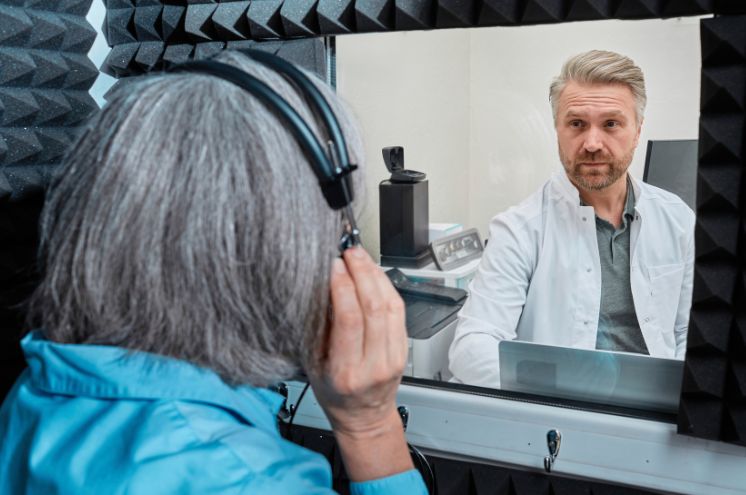
- An audiogram test measures the softest sounds you can hear at different pitches and helps your audiologist understand your hearing.
- Preparing for the appointment can make your results more useful, especially if you bring your symptoms, medical history, medications, hearing concerns, and questions.
- Carolina Hearing Doctors provides hearing evaluations and audiogram testing in North Carolina for patients who want clear answers and practical next steps.
What Is an Audiogram Test?
An audiogram test is part of a professional hearing evaluation. During the test, you listen for tones at different pitches and volumes, usually through headphones or insert earphones. Your responses are plotted on an audiogram, which shows the softest sounds you can hear in each ear.
An audiogram can help your audiologist understand:
- Whether your hearing is within the expected range
- Which ear hears better
- Which pitches are affected
- Whether hearing loss is mild, moderate, severe, or profound
- Whether the pattern suggests conductive, sensorineural, or mixed hearing loss
- Whether hearing aids, monitoring, medical referral, or other support may be recommended
You do not need to study for an audiogram, but a little preparation helps your audiologist connect the test results to your real-life listening concerns.
How to Prepare for an Audiogram Test Before Your Appointment
The best preparation is simple: think about what you have noticed, gather useful information, and arrive ready to describe your hearing in everyday situations.
Write Down Your Hearing Concerns
Before the appointment, make a short list of what has been difficult. Be specific if you can.
Helpful examples include:
- I miss words in restaurants.
- I hear people but speech sounds unclear.
- I turn the TV up louder than others prefer.
- I have trouble hearing children or soft voices.
- One ear seems worse than the other.
- I hear ringing, buzzing, roaring, or pulsing.
- I feel pressure, fullness, pain, or drainage.
- I avoid certain social situations because listening is tiring.
These details help your audiologist decide which tests may be useful and how to interpret your results.
Bring Your Medical and Hearing History
Your hearing history can explain why certain patterns appear on the audiogram. Bring or be ready to discuss:
- Previous hearing test results
- Ear surgeries or ear infections
- Noise exposure from work, hobbies, firearms, or music
- Dizziness, balance problems, or vertigo
- Tinnitus or sound sensitivity
- Family history of hearing loss
- Head injury or sudden hearing changes
- Current hearing aids or assistive devices
If you have a previous audiogram, bring it. Comparing old and new results can show whether your hearing has changed.
List Your Medications and Health Conditions
Some health conditions and medications can affect hearing, balance, tinnitus, or ear pressure. Bring a current medication list, including prescriptions, over-the-counter medicines, and supplements.
Also mention conditions such as diabetes, heart disease, autoimmune conditions, chemotherapy history, kidney disease, or neurological concerns if they apply. Your audiologist is not replacing your medical provider, but this context can help guide recommendations.
Bring Your Hearing Aids if You Use Them
If you already wear hearing aids, bring them to the appointment. Bring both devices, your charger or batteries, and any phone app you use with them.
Your audiologist may want to check:
- Whether the hearing aids are working
- Whether the devices match your current hearing
- Whether programming changes are needed
- Whether wax, moisture, or damage is affecting sound
- Whether your fit or comfort needs adjustment
Even if the appointment is mainly for testing, current hearing aids can provide useful information.
Avoid Loud Noise Before the Test
Try to avoid loud noise for at least several hours before your audiogram. Loud sound can temporarily affect hearing and may make your ears feel tired.
Examples include:
- Concerts
- Power tools
- Lawn equipment
- Firearms
- Loud headphones
- Very noisy work settings
If you cannot avoid noise because of work, tell your audiologist. They can factor that into the discussion.
Do Not Try to Clean Deep Inside Your Ears
Do not use cotton swabs, ear candles, hair pins, or other objects deep in the ear canal before your appointment. These can push wax deeper, irritate the ear canal, or cause injury.
It is fine to clean the outer ear gently. If earwax blocks the view of the eardrum or affects testing, your provider will explain the safest next step.
Plan for a Quiet, Focused Appointment
An audiogram requires attention. You will be asked to respond when you hear very soft sounds, even if you are not completely sure.
Before the appointment:
- Eat if you normally need to avoid feeling lightheaded.
- Bring glasses if you need them for forms.
- Bring a trusted family member if they help with communication.
- Allow enough time so you are not rushed.
- Silence your phone during testing.
You do not need to be nervous. The test is not painful, and there are no wrong answers.
What to Bring to an Audiogram Appointment
Use this quick checklist:
- Photo ID and insurance information, if applicable
- Current medication list
- Previous hearing test results
- Current hearing aids, charger, batteries, or accessories
- A list of listening situations that are difficult
- Questions about tinnitus, hearing aids, hearing protection, or next steps
- A family member or communication partner, if helpful
Bringing a communication partner can be useful because they may notice listening difficulties you have adapted to over time.
What Happens During the Audiogram Test?
Every clinic has its own process, but many hearing evaluations include several steps.
Case History
Your audiologist asks about your hearing concerns, health history, noise exposure, tinnitus, dizziness, communication needs, and previous hearing care.
Ear Check
The provider looks in your ears to check for visible wax, ear canal concerns, or eardrum issues that could affect testing.
Middle Ear Testing
Some appointments include tympanometry or other middle ear measures. These tests help check eardrum movement and middle ear function.
Pure Tone Testing
This is the part most people think of as the audiogram. You listen for beeps or tones and respond when you hear them. The audiologist tests different pitches and volumes in each ear.
Speech Testing
You may repeat words at different levels. Speech testing helps show how clearly you understand speech, not just whether you can detect tones.
Results Review
Your audiologist explains the audiogram and what it means. This is a good time to ask questions about hearing levels, ear differences, speech scores, tinnitus, monitoring, hearing aids, or medical referral.
Should You Reschedule an Audiogram If You Are Sick?
Call the clinic if you have a cold, flu, ear infection symptoms, sudden ear pain, drainage, or significant congestion. Sometimes testing can still be done, but illness or middle ear fluid may affect results.
You should also tell your provider if you recently had sudden hearing loss, dizziness, one-sided ringing, or new ear pressure. These symptoms may need prompt attention.
Common Questions About Preparing for an Audiogram
Can I eat or drink before a hearing test?
Yes. You can usually eat and drink normally before an audiogram. If you are scheduled for other medical testing the same day, follow the instructions from that provider.
Should I stop taking medication before the test?
Do not stop medication unless your physician tells you to. Bring your medication list so your audiologist has the full picture.
Can earwax affect audiogram results?
Yes, significant earwax can affect hearing test results. Do not try to remove deep wax yourself. Your provider can check your ears and explain the safest next step.
What if I am not sure I heard the tone?
Respond when you think you hear the tone, even if it is very soft. The test is designed to find the softest level you can detect. You do not need to wait until the sound is obvious.
How long does an audiogram test take?
The timing depends on the full evaluation, but many appointments include history, ear checks, testing, and results review. Ask the clinic when scheduling if you need a time estimate.
Will I get results the same day?
In most routine hearing evaluations, your audiologist can review the audiogram with you during the appointment. If more testing or medical follow-up is needed, they will explain why.
What to Ask After the Audiogram
Good questions can help you understand the results and next steps.
Consider asking:
- Is my hearing within the normal range?
- Is one ear different from the other?
- Which pitches are hardest for me to hear?
- What do my speech scores mean?
- Is the hearing loss conductive, sensorineural, or mixed?
- Should I monitor my hearing or take action now?
- Do I need a medical referral?
- Would hearing aids or assistive listening devices help?
- How often should I repeat testing?
- What can I do to protect the hearing I have?
If hearing aids are recommended, ask how the test results will be used for fitting and programming.
Preparing for an Audiogram Test in North Carolina
Preparing for an audiogram test does not need to be complicated. Bring your history, avoid loud noise beforehand when possible, do not dig into your ears, and think about the listening situations that matter most to you.
Carolina Hearing Doctors provides hearing evaluations, audiogram testing, hearing aid consultations, hearing aid fittings, tinnitus evaluations, earwax care, and follow-up support in North Carolina. A clear hearing test can help you understand what is happening and what to do next.
Contact us today to schedule a hearing test in Winston-Salem, NC or Clemmons, NC.